

In complex industries such as oil & gas, chemicals, construction, and energy, safety is non-negotiable. One powerful tool used to manage safety risks is the Hazard Identification HAZID study. This structured approach helps organizations detect potential hazards at an early stage—before incidents occur.

In this article, we’ll break down what a HAZID study is, how it works, when it should be used, and why it’s essential for safety and compliance. Whether you’re a project manager, engineer, or safety officer, understanding this method will help you make informed decisions that protect people, assets, and the environment.

What Is a HAZID Study?

Hazard Identification HAZID study

A Hazard Identification HAZID study is a systematic, team-based approach to identifying potential hazards in a process, system, or project. Unlike other risk assessment methods that come later in a project lifecycle, HAZID is typically conducted early—often during the conceptual or feasibility phase.

Its goal? To spot and assess possible risks before they become real threats.

HAZID stands for Hazard Identification, and it focuses on answering two key questions:

  1. What can go wrong?

  2. What would be the consequences if it does?

This proactive method is particularly useful for identifying hazards related to health, safety, and the environment (HSE).

Why Is Hazard Identification So Important?

Identifying hazards early allows project teams to:

  • Prevent accidents before they occur.

  • Avoid costly redesigns later in the project.

  • Comply with industry standards and regulatory requirements.

  • Foster a safety-first culture within the organization.

It’s much more cost-effective to prevent a problem than to fix it. A well-executed Hazard Identification HAZID study ensures that you’re not just reacting to risks—but actively managing them.

When Should a HAZID Study Be Performed?

Timing is critical. A HAZID should be carried out:

  • During the concept or feasibility stage of a project.

  • When significant design changes are made.

  • Before initiating major operations or expansions.

  • In the early planning phases of new installations or infrastructure.

By addressing hazards at the start, teams can integrate safety solutions into the design itself—rather than bolting them on later.

Who Should Be Involved in a HAZID Study?

HAZID is a collaborative effort. A typical team includes:

  • Project Engineers

  • HSE Professionals

  • Operations Staff

  • Maintenance Experts

  • Facilitator (usually an experienced safety engineer)

Each person brings a unique perspective, helping to uncover different types of hazards—whether operational, environmental, or procedural. The facilitator plays a crucial role in guiding the process and ensuring that all relevant areas are covered.

The HAZID Process Step-by-Step

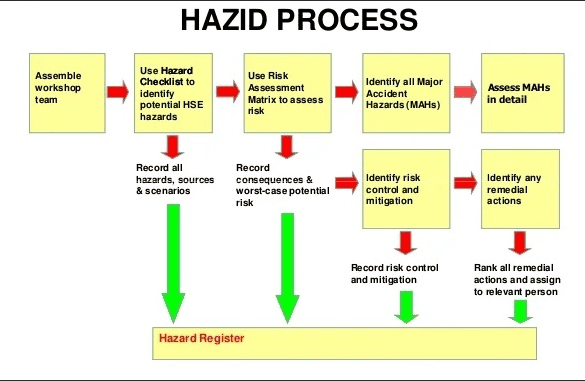
A Hazard Identification HAZID study follows a clear and structured workflow:

1. Preparation

The team gathers background information such as:

  • Project descriptions

  • Design drawings

  • Process flow diagrams

  • Applicable regulations

Clear objectives are set, and a schedule is agreed upon.

2. Session Kickoff

The facilitator explains the goals, scope, and method. Participants are encouraged to think broadly and creatively. Open communication is key.

3. Systematic Review

Using structured brainstorming, the team goes through the project section by section. Tools like checklists and guidewords (e.g., fire, explosion, leak) help identify potential hazards.

Each identified hazard is logged with:

  • Possible causes

  • Potential consequences

  • Existing safeguards

  • Recommendations for further action

4. Risk Ranking

While HAZID doesn’t go as deep into quantifying risks as HAZOP or QRA, it does assign priorities to help focus resources. A simple risk matrix (likelihood vs. severity) is often used.

5. Reporting

The outcomes are documented in a HAZID report. This includes:

  • A list of identified hazards

  • Recommendations and action items

  • Assigned responsibilities and timelines

This report becomes a valuable reference throughout the project lifecycle.

HAZID vs. HAZOP: What’s the Difference?

It’s common to confuse Hazard Identification HAZID study with HAZOP (Hazard and Operability Study), but they serve different purposes:

FeatureHAZIDHAZOP
TimingEarly in the project lifecycleLater, during detailed design
FocusBroad hazard identificationOperational deviations
Detail LevelHigh-level, qualitativeDetailed, often semi-quantitative
Time RequirementShorterLonger

In essence, HAZID is about spotting the big picture risks early, while HAZOP dives deeper into process-level hazards.

Advantages of Performing a HAZID Study

Investing time in a HAZID study offers multiple benefits:

  • Prevention of Major Incidents: Early detection means more opportunities to eliminate or reduce hazards.

  • Cost Savings: Avoiding redesigns and project delays saves time and money.

  • Better Compliance: HAZID supports regulatory submissions and audits.

  • Improved Team Alignment: Cross-functional collaboration enhances understanding and accountability.

It also improves communication between departments and creates a shared understanding of potential risks and mitigation strategies.

Real-World Example of HAZID in Action

Let’s say a company plans to build a new offshore gas platform. Before finalizing the design, a Hazard Identification HAZID study is conducted.

During the session, the team identifies a potential risk of gas leaks in the compressor area due to a valve failure. Though initial designs didn’t include gas detectors in that zone, the HAZID findings led to their inclusion—avoiding a potentially catastrophic scenario.

This proactive insight helped prevent future incidents, reduced insurance costs, and improved operational safety.

Limitations of a HAZID Study

While effective, HAZID is not a silver bullet. Its limitations include:

  • It relies heavily on team experience and expertise.

  • It may miss detailed hazards addressed in later studies like HAZOP.

  • It’s often qualitative, not quantitative.

That said, these limitations are why HAZID is usually the first step in a larger risk management framework. It lays the foundation for more detailed assessments later.

Final Thoughts:

In today’s high-stakes industrial environments, early risk identification isn’t just good practice—it’s essential. A Hazard Identification HAZID study helps organizations take control of safety from the very beginning of a project.

It supports smarter design decisions, aligns teams, and provides a roadmap for managing risk throughout the lifecycle. While it won’t catch everything, it significantly reduces blind spots.