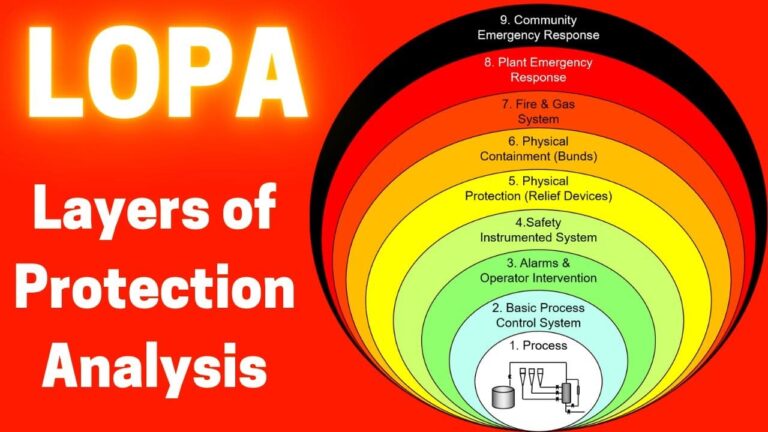
In the field of industrial safety, Layer of Protection Analysis LOPA is a crucial tool used to evaluate and manage risks associated with hazardous processes. It helps organizations identify layers of safety to prevent accidents, ensuring operational reliability. This article will explore what LOPA is, how it works, and why it’s essential for modern risk management.

What Is Layer of Protection Analysis LOPA?

Layer of Protection Analysis LOPA

Layer of Protection Analysis LOPA in Morocco is a semi-quantitative risk assessment method widely used in process safety management. It provides a structured approach to evaluating the risk associated with hazardous events and helps determine whether additional safety measures are necessary.

In today’s industrial landscape, managing risk is not only about compliance but also about protecting people, assets, and the environment. LOPA bridges the gap between qualitative methods like HAZOP and full quantitative risk assessments, offering a practical balance between depth and simplicity.

Why Layer of Protection Analysis LOPA Matters

Accidents in high-risk industries such as oil and gas, chemicals, and pharmaceuticals can have devastating consequences. While many systems are built with safety in mind, it’s essential to confirm that these protections are enough. That’s where LOPA comes in.

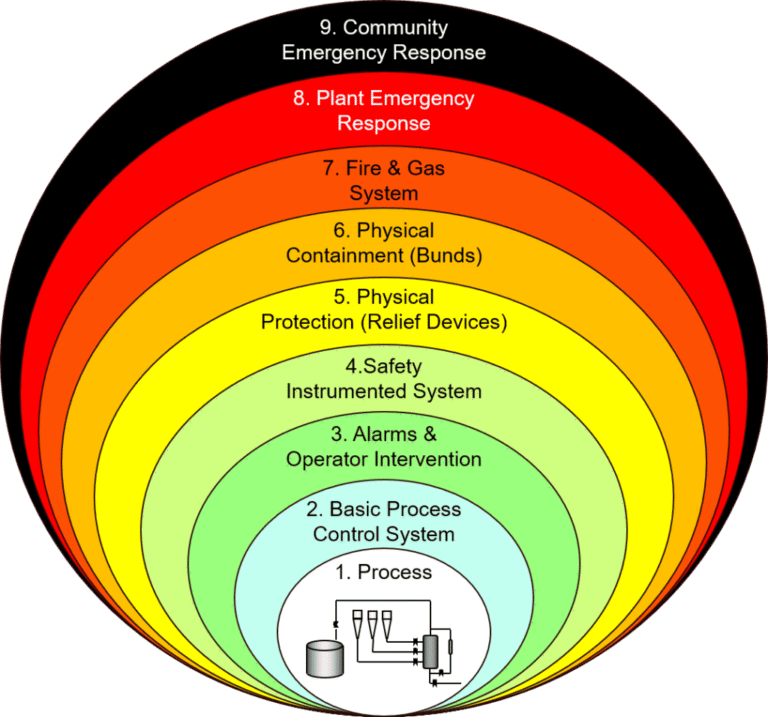
This method allows engineers and safety professionals to identify Independent Protection Layers (IPLs)—safeguards that act independently to reduce the likelihood of an incident. By evaluating each layer’s effectiveness, LOPA supports informed decisions on risk reduction.

Key Concepts Behind LOPA

To fully understand LOPA, it’s important to grasp a few foundational concepts.

Initiating Events

These are specific situations that could lead to a hazardous outcome. For example, a valve failure or operator error. Each initiating event has a known or estimated frequency.

Consequence Severity

This is the potential impact if a hazard were to occur. Consequences are categorized from minor to catastrophic, depending on the risk to people, environment, and property.

Independent Protection Layers (IPLs)

IPLs are safeguards that operate independently of each other and the initiating event. They must be:

  • Independent in function and control

  • Reliable and well-documented

  • Auditable and maintainable

Examples include relief valves, automatic shutdown systems, or operator intervention guided by alarms.

Risk Tolerance Criteria

Organizations use these criteria to decide whether the remaining risk is acceptable or if more IPLs are needed.

How LOPA Works: Step-by-Step

LOPA typically follows these steps:

1. Select a Scenario from a Hazard Study

Often, scenarios are drawn from a HAZOP (Hazard and Operability Study). Teams choose those with potentially serious outcomes.

2. Define the Initiating Event Frequency

Each initiating event is assigned a frequency based on historical data, industry standards, or expert judgment.

3. Identify Existing IPLs

Evaluate all current safeguards and determine whether they qualify as IPLs.

4. Estimate Risk Reduction

For each IPL, assign a Probability of Failure on Demand (PFD). This indicates how likely the layer is to fail when needed.

5. Calculate Risk

Use the formula:

Risk = Initiating Frequency × PFD of each IPL

Compare the result to your company’s risk tolerance threshold.

6. Decide on Additional Measures

If the risk exceeds acceptable levels, more IPLs may be required. This could involve redesigning processes or installing new safety systems.

Benefits of Using Layer of Protection Analysis LOPA

1. Structured and Repeatable

LOPA provides a systematic approach that reduces subjectivity. Teams can repeat the analysis consistently across projects.

2. Clear Decision-Making

With semi-quantitative data, it’s easier to justify safety investments to management and stakeholders.

3. Focus on High-Risk Scenarios

LOPA doesn’t attempt to analyze every possible risk. Instead, it concentrates on the most critical ones, optimizing resources.

4. Helps Meet Regulatory Requirements

Regulators often require documented evidence of risk reduction. LOPA helps meet these demands with defensible data and rationale.

Common Misconceptions About LOPA

It Replaces Other Risk Assessments

LOPA complements, rather than replaces, tools like HAZOP or Fault Tree Analysis. It’s most effective when integrated into a broader safety strategy.

All Safeguards Qualify as IPLs

Not every protection measure counts. For instance, operator procedures may not qualify unless proven to be consistently reliable.

It’s Only for Large Companies

LOPA is scalable. Even smaller operations can benefit, especially when dealing with potentially hazardous materials or processes.

Challenges and Limitations

Despite its strengths, LOPA has limitations:

  • It requires reliable data for frequencies and PFDs.

  • Estimations may introduce uncertainty.

  • It may oversimplify complex interactions between systems.

Proper training and expert facilitation help overcome these challenges, ensuring the results are meaningful and actionable.

Real-World Example of LOPA in Action

Let’s consider a chemical reactor that could overpressure due to a cooling failure.

  • Initiating Event: Loss of cooling (occurs once every 10 years).

  • Consequence: Vessel rupture and toxic release.

  • IPLs:

    • Pressure relief valve (PFD = 0.01)

    • High-pressure alarm with operator response (PFD = 0.1)

Risk = 0.1 (event/year) × 0.01 × 0.1 = 0.0001 events/year

If the company’s risk tolerance is 1 in 10,000 years, this result is acceptable. Otherwise, more safeguards would be needed.

When Should You Use LOPA?

LOPA is best used when:

  • A HAZOP identifies scenarios with significant risk.

  • There’s a need to justify capital expenditure on safety systems.

  • You want to balance risk and cost without full quantitative modeling.

It’s particularly valuable during the design phase of new projects or when modifying existing systems.

Best Practices for Effective LOPA
  • Involve multidisciplinary teams: engineers, operators, safety personnel.

  • Use verified data for initiating events and PFDs.

  • Regularly review and update your LOPA as systems change.

  • Document assumptions clearly for future audits.

Conclusion:

Layer of Protection Analysis LOPA in Morocco is a powerful tool for evaluating and managing industrial risk. By focusing on independent protection layers and quantifying their impact, organizations can make smarter, safer decisions.

While it doesn’t replace all forms of risk assessment, it brings clarity and structure to complex safety challenges. Whether you’re designing a new facility or reviewing an existing one, LOPA offers a practical, repeatable way to ensure your protection systems truly measure up.

Have you considered using LOPA in your operations? What challenges or benefits have you experienced with it?